The Urban, Savarna, Hindu Male Realizes He’s the Subaltern: Intersectionality and Illusions
In this post, I discuss the intersectionality of caste, especially in the Indian diaspora, and how upper-caste Indians often ignore their caste privilege while facing racial discrimination abroad.
Published: 8/28/2025
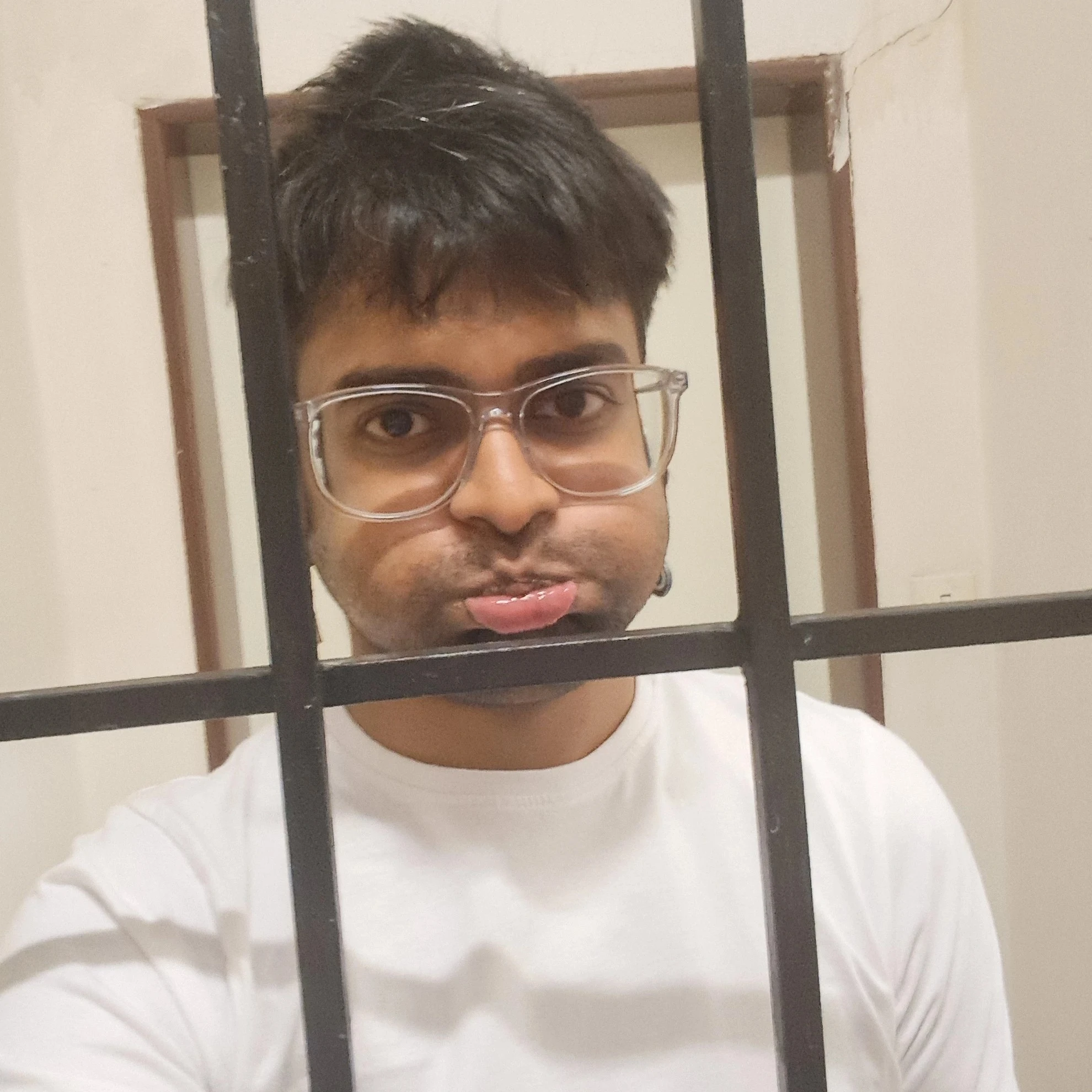
Image Credit: Yamun Sharma.
Positionality 101 (Or Why I Am Even Writing This)
If you’ve ever studied anthropology, you know one of the first things you’re told is: “Acknowledge your positionality.” That’s basically academic-speak for: don’t pretend you’re an objective robot; tell us who you are, what baggage you carry, and how it shapes your perspective.
So, here’s me: I am urban, Savarna, Hindu, male, and specifically, a Brahmin. A sentence that would make Ambedkar spin in his grave if I then went on to call myself the subaltern. (Spoiler: I won’t, but many Savarnas do.)
I studied humanities in college, specializing in social and cultural anthropology. During my years abroad in the Czech Republic, I researched Indian diaspora festivals. My research sample was unusually wide, meaning I probably met more Indians in Czechia than the average Czech or Indian in the Czech Republic ever will. And here’s where things got interesting: most of these Indians were Savarna. The few Bahujans I met were usually laborers in smaller towns like Česká Lípa, or first-generation upwardly mobile families. Even most of these people were OBCs, while SCs and STs were almost invisible in these circles.
Meanwhile, I was getting a crash course in racism in Europe. I’ve had someone “apologize” to me when I told them I was from India, because (in his words) I came from a “shitty country.” Another time, a classmate told my friend that Indians don’t wash their hands after using the toilet. And then there’s the classic—Indians smell like curry. (I’d honestly respect the insult more if they at least specified which curry. They don’t all smell the same!)
So yes, brown people abroad do face real racism. But here’s the illusion: many Savarnas, when they face this racial othering, suddenly start calling themselves oppressed while completely ignoring the centuries of privilege they still carry within Indian society and also Indian diasporic communities.
The Roma and My Anthropological Wake-Up
What really opened my eyes to this selective understanding of oppression was, oddly enough, a festival. While at Charles University one summer, I attended Khamoro, the annual Roma festival in Prague. It was dazzling—music, dance, celebration of a culture that, for centuries, Europe has tried to erase or degrade.
Given that the Roma are widely believed to have migrated from India centuries ago, I couldn’t help but draw comparisons and notice the irony: here were a people linked to the same subcontinent as me, yet occupying such a vastly different social position.
The Roma are structurally marginalized in Europe, often treated as the “internal other.” In contrast, Indians—especially Savarnas—were not seen in the same way. In fact, many Czechs respected India (or at least their orientalist fantasy of it). As the Czech Indologist Martin Hříbek has argued in his article, the “Czech other” has historically been groups like the Roma or, increasingly, the Vietnamese diaspora. Indians, by contrast, were sometimes seen as exotic but rarely despised in the same entrenched way. I don’t fully agree with Hříbek here, because while the orientalist gaze on Indians may not look like hostility every time, it is still very much orientalism—exoticizing, stereotyping, and flattening Indian identities into simplistic tropes.
Nevertheless, this hit me hard: in Czechia, Savarna Indians like myself had more in common with privileged migratory groups than with the Roma. Yet in diaspora conversations, Indians (most of them Savarna) spoke as though they were the Roma of Europe. They were quick to frame themselves as the oppressed, but never paused to ask what privileges they carried with them into those spaces.
Later, during my Erasmus in Tallinn, I sat in on a lecture by a white, English-speaking professor—an insider flipping the script—who described the different biases in learning game design (Male, English-speaking, Western, White, Upper-Class). He went on to argue that at the end of the day, capitalism and class are what really matter, saying something like: ‘A rich Black person and a rich white person will always have more in common than a poor Black and a poor white person.’ It struck me then how this logic mirrors the Savarna reasoning abroad: you’ll talk race or religion all day, but caste (and the class it embeds) stays conveniently in the shadow. Ironically though, the professor only really recognized as a problem the one identity he didn’t quite possess—class (bourgeoise)—because as a middle-class (proletariat) man he could cast himself as oppressed, while his being male, white, and English-speaking barely registered to him as relevant.
This gap—between how oppression is experienced and how it is narrated—was my anthropological wake-up call.
Why “Upper Caste” Gets Scare Quotes
Notice how I keep putting “upper caste” in quotes? That’s deliberate. Because caste isn’t simply class or race. It’s identity. It’s community. For Bahujans, it’s also the history of oppression that has shaped their very existence. To deny them their caste now, after centuries of violence, would be like denying colonized countries their modernities (yes that’s not a typo, it is supposed to be in plural) because colonizers suddenly had a change of heart. Or, to get cheeky: it’s like privileged men suddenly saying sex work is immoral, after centuries of enjoying it. Who gave them the right to decide?
A strong example of how the power to define identity is monopolized by those coming from dominant and privileged positions is how anti-racism movements impose new terminology on Black authors. Even with the best of intentions, this can become another form of imposition, as Minna Salami, a Black writer herself discusses in her article. She argues that Black authors, should have the agency to decide how their identities are framed. The debate over capitalizing the “B” in Blackness is a strong example of this. When influential institutions like the Associated Press (known as the bible of journalism) updated their style guide to capitalize the “B”, in “black” many anti-racist scholars found this transformational. It was a change that many Black scholars welcomed since it frames the lowercase “black” as a color rather than an identity. This small typographical change holds many different meanings: for centuries, Black people have been forced into limiting racial categorizations, it was a color that defined them. However, now this imposition is reaching out to an extent that White scholars are arguing with Black authors on what is the correct way to refer to their own communities. This is yet another epistemic control over when and where something is right and when it is not. And the decision to decide the time and the discourse of what is right always remains to be in the hands of the powerful and the oppressors, themselves. Minna Salami makes a strong case that Black people have the power to shape their own identities, not just conform to externally imposed standards, however well-meaning they may seem.
That’s the power game: Savarnas get to decide when caste matters and when it doesn’t. When it benefits them, caste is “tradition.” When it implicates them, caste is “outdated.” That’s why I’ll either use Savarna, or “upper caste” with air quotes—because it’s not inherently superior, and because acknowledging Bahujan caste identities as equal is non-negotiable.
Intersectionality Abroad: The Convenient Version
When Savarnas move abroad, they suddenly embrace a simplified version of intersectionality: “I am brown, therefore I am oppressed.” Sure, racism and xenophobia are real. But where does caste fit into this picture? It usually doesn’t.
At best, caste is reduced to dinner-table nostalgia about family surnames or “which region are you from?” At worst, it’s twisted into a new form of victimhood: “We’re being oppressed by the state back home because of reservations. I didn’t get into an IIT because of quotas.”
This is where anthropology-trained me wants to bang my head against the nearest ethnographic table. Because data tells us the opposite: Savarnas are still absurdly overrepresented in positions of power.
The Numbers Don’t Lie (or do they?)
Let’s look at some facts that shatter the “Savarna as victim” illusion.
Judiciary
A striking example of entrenched upper-caste dominance is the Indian Supreme Court.
- As of 2023, 36.4% of sitting Supreme Court judges are Brahmins—despite Brahmins comprising only around 5% of India’s population. The rest of the bench is similarly skewed toward other privileged forward castes like Banias, Kayasthas, and Rajputs (Supreme Court Observer, Feminism in India).
- SC/ST/OBC judges remain minimal. Only about 12.1% of current judges are from Scheduled Castes or OBCs—starkly disproportionate to their combined population share of over 60% (Supreme Court, Observer Feminism in India).
- Historically, between 1950 and 1989, over 40% of Supreme Court judges were Brahmins, and nearly 50% were from other forward castes. SC/ST/OBC representation never crossed 10% in that period (NewsClick).
- Among Chief Justices of India, at least 14 out of 47 have been Brahmins (~30%) (Bar and Bench - Indian Legal news, The Leaflet).
- Examining more recent appointments:
- Between 2018 and 2023, 75.7% of judges appointed to higher judiciary were from the general (upper-caste) category, with only 11.7% OBC, 3.5% SC, and 1.5% ST (Business Standard).
- A widely shared social-media claim (by retired Judge K. Chandru) notes that 79% of judges appointed in the past five years were upper-caste, with Brahmin representation specifically around 34% (Kerala Kaumudi).
Academia (IITs and IISc)
In India’s premier tech-educational elite:
- A Nature investigation found that in the top five IITs (Delhi, Bombay, Madras, Kanpur, Kharagpur), and IISc Bengaluru, 98% of professors and over 90% of assistant/associate professors are from privileged (upper-caste) groups (Nature).
- Reserved quotas (15% for SC, 7.5% ST) are not being implemented in faculty recruitment (ThePrint).
- Among PhD students, Dalits make up around 10%, Adivasis a meagre 2%. Faculty reservation quotas? Largely ignored (TheQuint).
- Similarly, DST’s INSPIRE Fellowships from 2016–2020 had 80% recipients from privileged castes, while only 6% were SC and <1% ST (TheQuint).
The data paints a powerful picture: spaces commonly valorized as “meritocratic” are deeply hostile to caste diversity.
Civil Services
The “steel frame of India,” the IAS and allied services, has long been dominated by Savarnas. While reservations have improved OBC/SC/ST representation, top leadership roles still tilt heavily Savarna. (Even the term “merit” in UPSC circles is often code for Savarna.)
So, no, Savarnas are NOT oppressed by the state. THEY ARE THE STATE. They dominate its judiciary, its science institutions, its bureaucracy. Calling themselves oppressed because of caste reservations is like the Indian PM (Prime Meritocratic) billionaire Gautam Adani complaining that the poor get free rice.
Why Don’t Savarnas See Caste Abroad?
To begin with, Savarnas often don’t even notice caste back home—privilege works best when it feels invisible. So when they move abroad, it’s not surprising that caste slips even further out of sight. If anything, their privilege makes it easier to hide behind a new identity of simply being “Indian,” while the caste inequalities fade conveniently into the background.
Basically, when you move abroad from India, caste becomes less visible. White colleagues won’t ask if you’re a Brahmin or Yadav. Most won’t even know what that means. So, your Savarna privilege feels “neutralized,” while your brownness suddenly feels hyper-visible.
That’s why Savarnas abroad slip into this comfortable illusion: “Here, I am only oppressed.” Which, to be clear, is a less than half-truth. Abroad, you are racialized. But your caste privilege doesn’t vanish; it just hides in plain sight.
For example: Why did I mostly meet Savarnas among the Indian diaspora in Czechia? Because caste privilege shapes who can afford to go abroad, who can navigate visas, who gets scholarships, who has family networks in Europe. Meanwhile, Bahujans remain underrepresented not because they don’t want to migrate, but because the social and economic capital required to do so is itself caste-mediated.
Personal Encounters with the Illusion
During my fieldwork, I had some of these bizarre conversations:
- I’d tell someone, “Brahmins are less than 5% of India’s population,” and they’d be shocked. “Really? I thought it was 30%!” Why? Because almost everyone they knew in their circles was Brahmin. Their sample was as biased as mine.
- Some Savarna students abroad would moan about how reservations kept them out of IITs. But when I showed them the stats—that 98% of IIT professors are Savarna—they’d go silent, or change the subject to cricket.
The illusion of oppression is not just ignorance; it’s a convenient narrative. It’s easier to say “I am discriminated against because I’m Indian abroad” than to say “I also benefit from centuries of caste power back home and here in my community.”
Here Comes the Intersectionality
What I’ve learned, through anthropology and through life, is that intersectionality isn’t just about tallying up how oppressed you feel in a given context. It’s about acknowledging all the axes of privilege and disadvantage that shape you—simultaneously.
For Indian Savarnas abroad, that means holding two truths at once:
- Yes, you are racialized and discriminated against in white-majority countries.
- But you also carry caste privilege that continues to shape opportunities, even in diaspora spaces.
Intersectionality demands more honesty than that. It demands we stop clutching the illusion of oppression while ignoring the privileges that brought us here in the first place.
So, the next time a Savarna abroad claims they’re oppressed because they didn’t get into IIT, I’ll remind them: 98% of IIT professors are still people like you. And if you think that’s oppression, wait till you see what real exclusion looks like.